
Panel-Level Packaging
Precision Reflow for the Demands of Panel-Level Packaging
Wafer Bumping • Ball Attach • Fan-Out Panel Packaging • Substrate Reflow

BTU reflow ovens are built for the exacting demands of panel-level packaging, where interconnect quality and process repeatability determine yield.
Panel-level packaging (PLP) is redefining the economics of advanced semiconductor manufacturing—but it places extraordinary demands on the reflow process. Wafer bumping and ball attach reflow are core steps in PLP, directly impacting the interconnect quality and reliability of high-density devices.
The challenges are significant: panels up to 700mm x 700mm must be processed with uniform temperature distribution to maintain consistent bump shape and size across the entire substrate. CTE mismatch between dissimilar materials introduces risk of warpage and thermal stress. And precise control of ramp rate, peak temperature, and time above liquidus is essential to achieve complete solder melting without compromising planarity or bump uniformity.
BTU’s Pyramax and Aurora reflow ovens are purpose-configured to meet these requirements—delivering the thermal uniformity, atmosphere control, and heating/cooling precision that PLP processes demand.

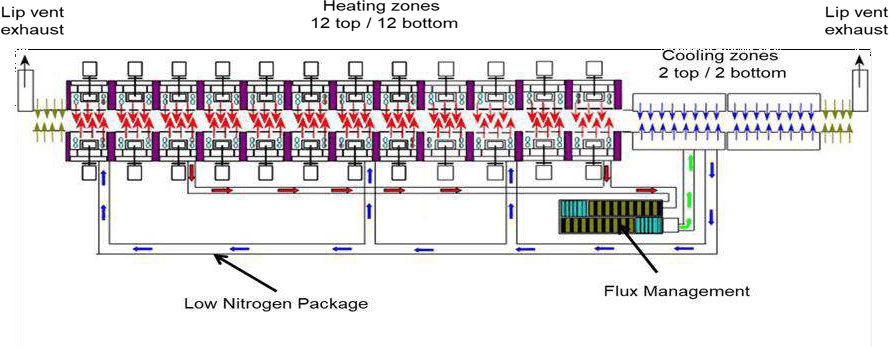
Key features for panel-level packaging
-
Thermal Uniformity <4°C Across Panel Width
High convection rates and optimized impingement deliver consistent delta T across panels up to 700mm x 700mm—ensuring uniform bump formation and high process Cpk.
-
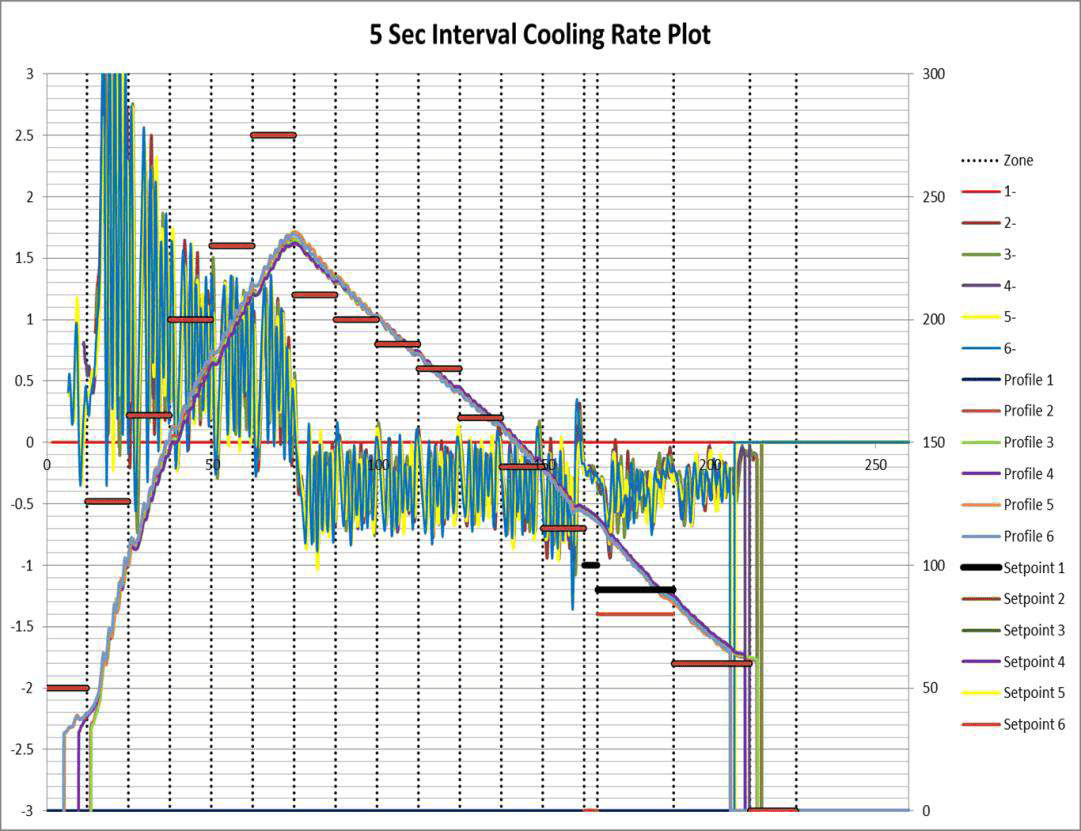
Controlled Heating and Cooling Rates
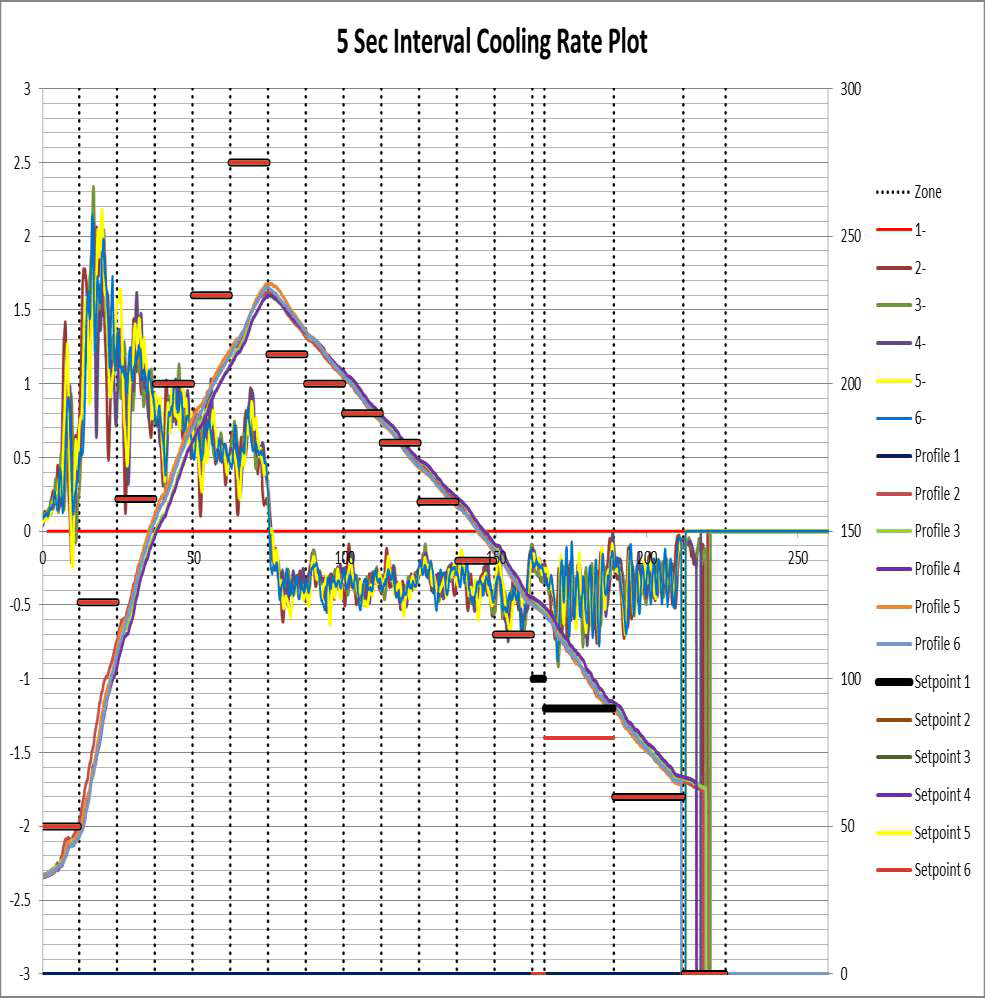
Programmable ramp rates and controlled convection minimize thermal gradients and dT/dt micro-spikes—protecting against CTE mismatch-induced warpage, delamination, and microcracking.
-
TrueFlat Warpage Elimination
Vacuum hold-down maintains substrate planarity throughout the reflow cycle. Purpose-built for ultra-thin panel substrates where warpage directly impacts bump yield.
-
Inert and Reducing Atmosphere Support
Single-digit ppm O₂ control in N₂ environments, plus forming gas and formic acid capability for fluxless reflow—with full leakage monitoring and safety controls.
-
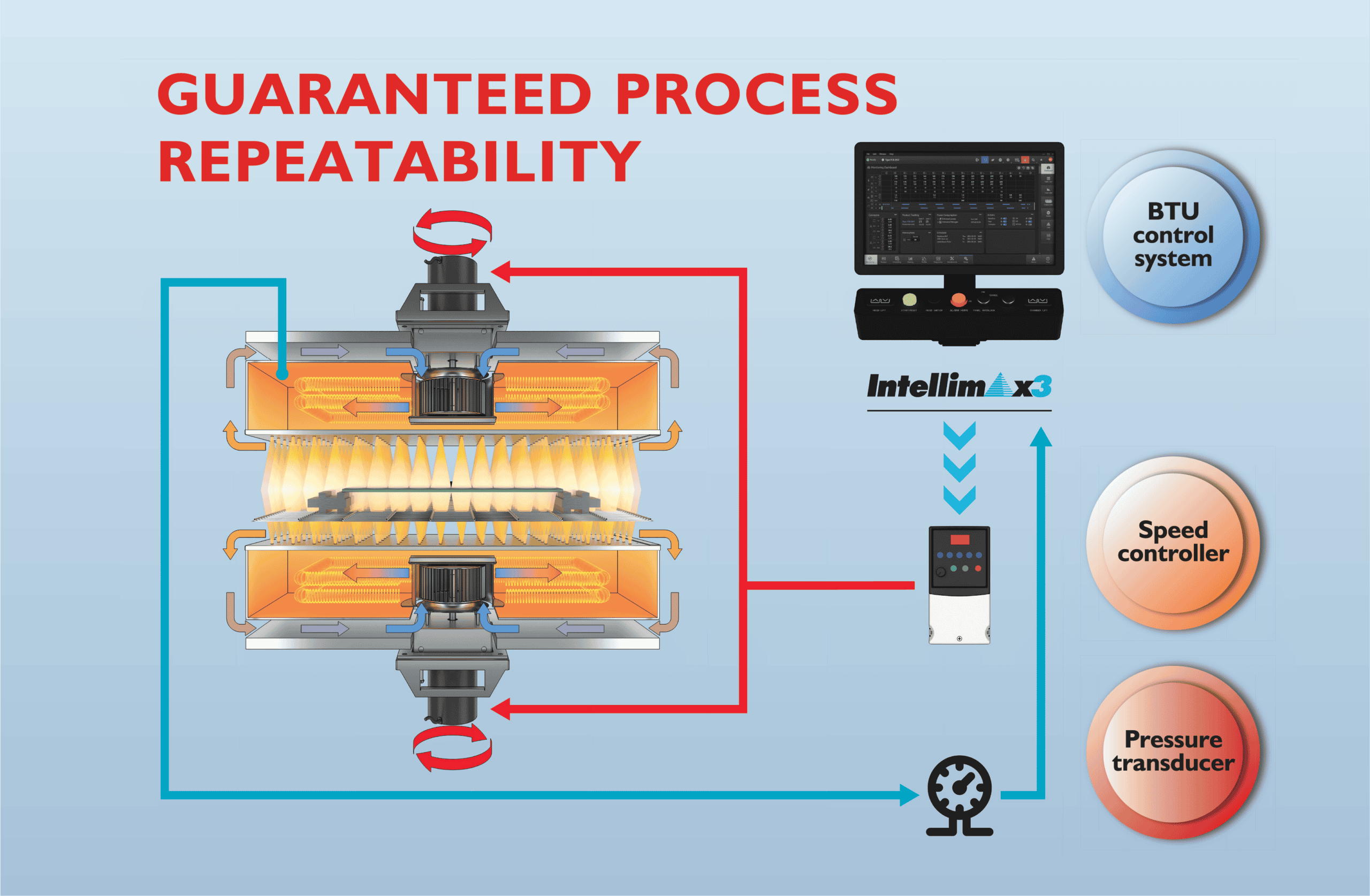
Oven-to-Oven Repeatability
Closed loop convection control and matched calibration enable a single recipe to run reliably across multiple BTU ovens worldwide—essential for high-volume PLP production across global fabs.
-
Profile Type Flexibility
Support for Ramp-Soak-Spike (RSS/Step) and Lazy S profile types, accommodating diverse solder alloy requirements and component layouts with varied thermal mass.
Thermal Uniformity Across Large Panel Formats
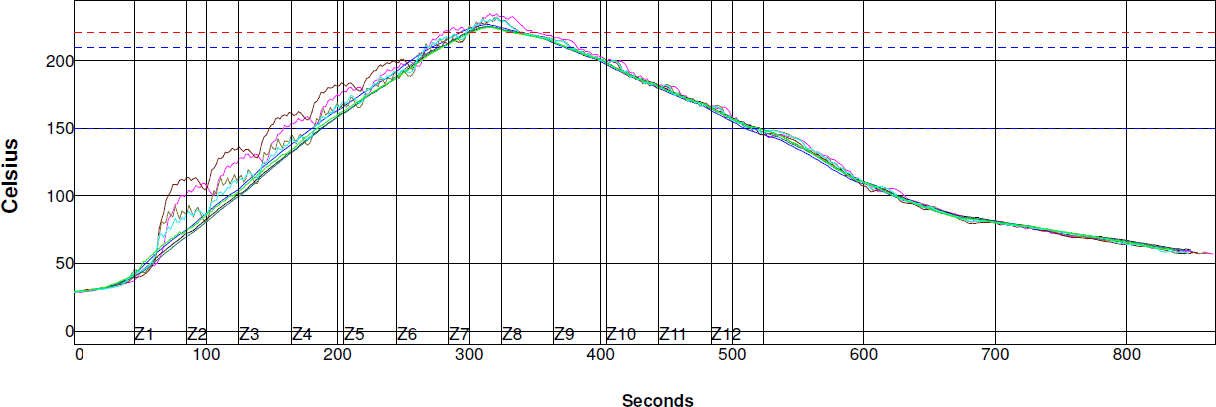
As panel sizes move toward 700mm x 700mm and beyond, maintaining uniform temperature distribution across the conveyor width becomes increasingly critical. Uneven heating causes inconsistent bump shape and size—and in worst cases, localized cold joints or overheating at panel edges.
BTU’s high convection rates and optimized impingement technology deliver tight delta T across the full panel width, ensuring every bump reaches the target reflow temperature simultaneously. Our uniformity specification of less than 4°C across the panel supports the Cpk values that high-yield PLP production requires.
BTU’s oven-to-oven repeatability—enabled by closed loop convection control, consistent calibration, and matched exhaust—allows a single recipe to run reliably across multiple systems worldwide.
Warpage Control and CTE Mismatch Mitigation
Panel-level packages integrate diverse materials—silicon dies, organic substrates, underfill compounds—each with different coefficients of thermal expansion. Rapid temperature changes cause differential contraction that results in warpage, delamination, and microcracking at interfaces.
BTU ovens provide precise, programmable control over both heating and cooling rates to minimize thermal gradients at every stage of the profile. Our controlled convection technology reduces micro-spikes in the thermal gradient (dT/dt), delivering smoother transitions that protect mechanical integrity across the panel.
For ultra-thin substrates where warpage is a primary yield concern, the Pyramax TrueFlat applies uniform vacuum suction throughout the reflow process to maintain planarity—even at the temperatures required to fully reflow the solder.
Atmosphere Control: Inert and Reducing Environments
Oxidation is a persistent challenge in PLP reflow. Exposed copper and solder surfaces begin oxidizing at room temperature, and the rate accelerates significantly with heat. In fine-pitch interconnects, even minor oxidation degrades solderability, reduces wetting, and compromises joint reliability.
BTU ovens support multiple atmosphere strategies for PLP applications:
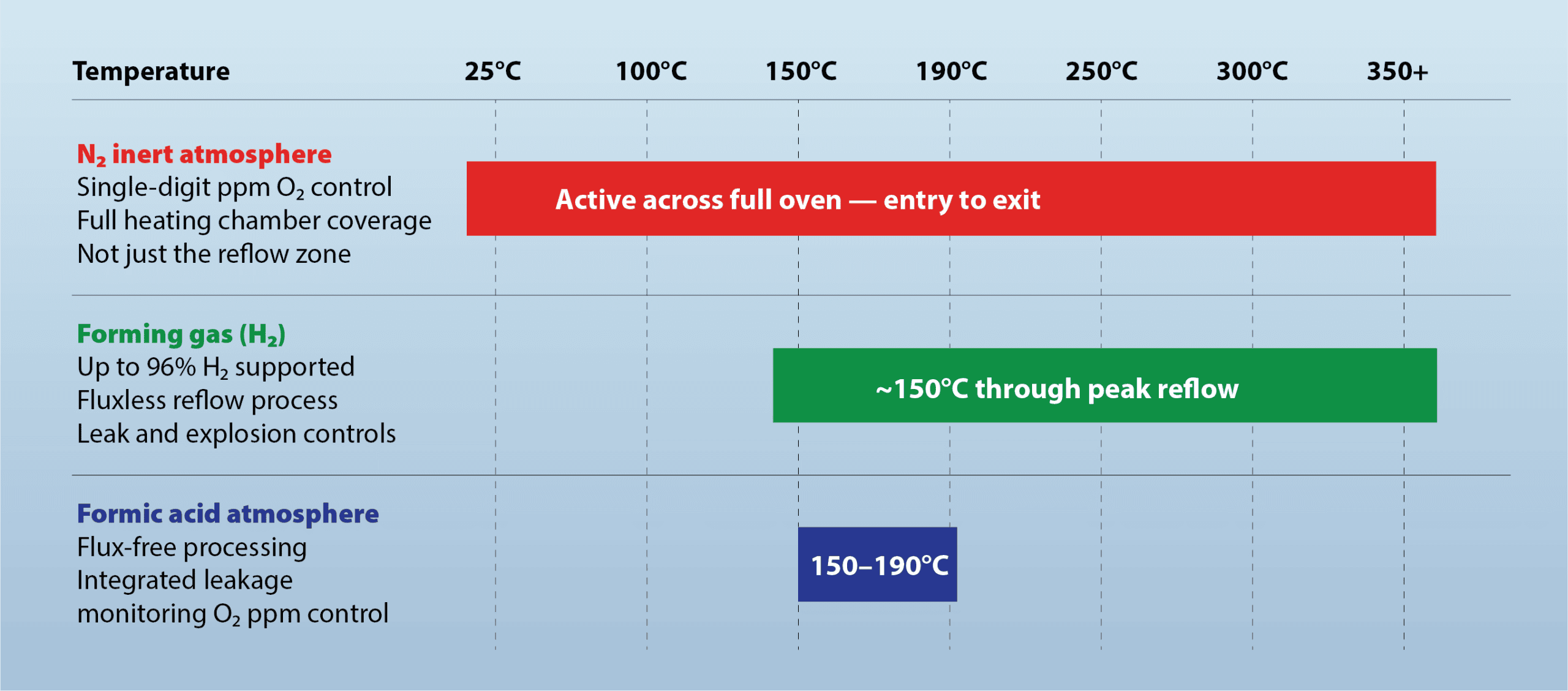
- Inert (N₂) atmosphere with single-digit ppm O₂ control throughout the entire heating chamber—not just the reflow zone
- Forming gas (H₂) for high-temperature bumping processes requiring fluxless reflow, with leak and explosion control up to 96% H₂
- Formic acid atmosphere, active from 150–190°C, for flux-free processing with integrated leakage monitoring and O₂ ppm control
Oven Configuration Matched to Process and Throughput
Selecting the right oven configuration for PLP starts with the thermal profile requirements and production output targets. Heated length, zone count, and conveyor speed all work together to determine whether a single-lane or dual-lane oven—and which platform—best fits the application.
BTU’s Pyramax and Aurora platforms offer configurable zone architecture across a range of heated lengths, allowing process engineers to match the oven to the specific profile time requirements of their PLP process while meeting throughput targets. Dual-lane configurations can effectively double output using a shorter heated length.
BTU’s applications engineers work directly with customers to model profile requirements against oven configurations—ensuring the right fit before capital is committed.

Talk to BTU’s applications engineers about reflow solutions purpose-built for high-yield panel-level packaging.
Reflow Oven Resources
IN THE NEWS


